
"fruit grains"
5000 article(s) found

Standardized production technology of Yunnan small-grain coffee, fresh fruit picking and initial processing and washing steps
Yunnan small grain coffee fresh fruit picking and initial processing washing treatment steps Yunnan coffee fresh fruit harvest is generally divided into three batches: early ripening fruit from the end of October to mid-December, and concentrated ripening period from mid-late December to the end of January. the overall quality of this batch of coffee is the best; in February, most of the remaining fruits are diseased fruits, and the yield is very little. Coffee picking needs to pay attention to: coffee

What's the taste of Yunnan coffee? what's the quality?
Small-grain coffee is suitable for growing in the mountains at an altitude of 800 to 1800 meters. If the altitude is too high, it will taste sour, and if it is too low, it will taste bitter. Small grains of coffee are mostly planted in dry and hot valleys about 1100 meters above sea level, so they are moderately sour, rich and mellow. There is a unique environment suitable for the growth of small seed coffee in many areas of Yunnan, and the quality of small seed coffee is excellent. The planting area is mainly distributed in the

How does Yunnan Huaguoshan small Coffee come from? how to divide the grades of Huaguoshan small Coffee beans
For the exchange of professional baristas, please follow the coffee workshop (Wechat official account cafe_style) Yunnan small Coffee, Rubiaceae, Coffee Genus, planting areas are mainly distributed in Lincang, Baoshan, Simao, Xishuangbanna, Dehong and other states. Small grains of coffee are native to Ethiopia or Arabian Peninsula. Flavor description: thick but not bitter, fragrant but not strong, flower fragrance, sweet melon in the middle, tail

Yemeni Coffee with complete Grain shape and unique Flavor introduction to Fine Coffee beans in Manor
Yemeni coffee originated from Arabian coffee trees hundreds of years ago, all produced in areas above 3000 feet above sea level. For hundreds of years, the unique planting and production methods of Yemeni coffee have remained almost unchanged. The seedlings of Yemeni coffee trees are first cultivated in nurseries and then transplanted to high elevations. Pesticides and fertilizers are not used in the breeding process. Mature coffee beans are naturally dried on coffee trees and shelled by stone grinding.

History of Coffee cultivation in Yunnan Coffee Origin and Development
Professional coffee knowledge exchange more coffee bean information Please pay attention to Coffee Workshop (Wechat official account cafe_style) Coffee is a beverage crop with high economic value. It is called the three largest beverages in the world together with cocoa and tea, and its output and consumption ranks first among the three beverages. Because coffee is rich in protein, fat, sucrose, starch, glucose, caffeine and other substances, aroma

Arabica Coffee beans Coffee cultivation in China
Arabica coffee accounts for 70% of all coffee production, and its excellent flavor and aroma make it a direct drinkable coffee with only eight Arabica beans (8). But its resistance to dryness, frost, diseases and insect pests is too low, especially the natural enemy of coffee-leaf rust, so all producing countries are committed to

Introduction to the planting environment of small grain coffee flavor and taste of Arabica coffee in Yunnan
Arabica is deeply loved by Chinese people with a short history of coffee contact because of its strong fruity aroma. it was introduced to China by missionaries in the 19th century and was widely planted in Panzhihua, Sichuan, and the dry-hot valley of the Jinsha River in western Yunnan, where the sunshine was long and there was a big temperature difference between day and night. The local people solved the problem of insufficient seasonal rainfall by diverting water up the mountain.

Home coffee, pay attention to the price of Chinese coffee, Yunnan small coffee beans
Coffee is a kind of beverage crop with high economic value, which is called the three largest beverages in the world together with cocoa and tea, and its output and consumption ranks first among the three beverages. Coffee is rich in protein, fat, sucrose, starch, glucose, caffeine and other substances, rich aroma and delicious taste. Coffee is a perennial evergreen shrub or small tree of the genus Coffea of Rubiaceae.

Types and varieties of coffee
Coffee is a plant of the genus Coffea genus of Rubiaceae. According to the study of Chevalier,1947, there are 66 species in four groups, including 24 species in Eucoffea group, 18 species in Mascarocoffea group, 13 species in Paracoffea group and 11 species in Argocoffea group.

How about Arabica coffee? Arabica coffee flavor
Following Cafe Review (Wechat official account vdailycom) found that Arabica beans, which opened a small shop in Beautiful Cafe, was an important kind of commercial coffee, resulting in a period of less than three years, with a high-quality aroma and sour taste. Arabica coffee beans are mainly produced in South America (except parts of Argentina and Brazil), Central America, Africa (Kenya, Ethiopia and other places), mainly in the east.

Yemeni Coffee varieties with complete Grain shape and unique Flavor introduction to Fine Coffee beans in Manor
Yemeni coffee originated from Arabian coffee trees hundreds of years ago, all produced in areas above 3000 feet above sea level. For hundreds of years, the unique planting and production methods of Yemeni coffee have remained almost unchanged. The seedlings of Yemeni coffee trees are first cultivated in nurseries and then transplanted to high elevations. Pesticides and fertilizers are not used in the breeding process. Mature coffee beans are naturally dried on coffee trees and shelled by stone grinding.

Introduction to the Flavor of Fine Coffee beans with unique Grain shape and complete Yemeni Coffee varieties
Yemeni coffee originated from Arabian coffee trees hundreds of years ago, all produced in areas above 3000 feet above sea level. For hundreds of years, the unique planting and production methods of Yemeni coffee have remained almost unchanged. The seedlings of Yemeni coffee trees are first cultivated in nurseries and then transplanted to high elevations. Pesticides and fertilizers are not used in the breeding process. Mature coffee beans are naturally dried on coffee trees and shelled by stone grinding.

The most traditional Arabica coffee variety-Arabica Arabica coffee
Arabica bean scientific name: coffea arabica (Arabica bean) family: Rubiaceae coffee tree can be divided into two main varieties: Arabica species (coffea arabica) and Robusta species (coffea robusta/coffea canephora) (rare on the market). Arabica (Coffea arabica) is the most traditional Arabica coffee variety. Originated in the east

The Origin of Yunnan small Coffee
Origin: in 1892, French missionary Father Tian succeeded in growing coffee in a place called Zhukula in Yunnan. Up to now, there are still 24 coffee trees which are more than 90 years old in Zhukula Township. Zhu Kula is a mysterious, legendary and beautiful natural village, which belongs to the Zhukula Village Committee of Pingchuan Town, Binchuan County, Dali Prefecture. It is located on the banks of Yupao River, a tributary of the Jinsha River. It is a Dali Prefecture and Chuxiong.
Types and varieties of coffee
Coffee is a plant belonging to the genus Coffea in the Rubiaceae family. According to Chevalier (1947), the genus Coffea is divided into four groups with 66 species, including 24 species in Eucoffea group, 18 species in Mascarocoffea group, 13 species in Paracoffea group and 11 species in Argocoffea group

Does China have its own boutique coffee beans A brief introduction to Yunnan Baoshan small Coffee
Professional coffee knowledge exchange more coffee bean information please follow the coffee workshop (Wechat official account cafe_style) Lujiangba in Baoshan, Yunnan Province is a unique dry and hot valley climate in Yunnan Province and even the whole country, which is very suitable for the growth of Arabica (small grain coffee). Lujiang Dam, Longyang District, located at the eastern foot of Gaoligong Mountain and on both sides of Nujiang River, is located at 98449905 east diameter and 24462533 north latitude.

Yunnan small grain coffee which tastes good _ authentic Yunnan small grain coffee where to buy better?
Professional coffee knowledge exchange more coffee bean information Please follow the coffee workshop (Wechat official account cafe_style) I believe many friends have not heard of Yunnan small grain coffee, after all, the ones we often drink on the market are foreign brands, in fact, we also produce coffee in China. Yunnan coffee acreage and output account for more than 99% of the country's total. Natural conditions in Yunnan and Columbus
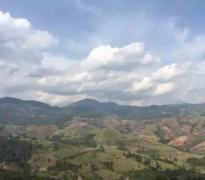
Yunnan tin card raw bean batch occurs bean price Yunnan authentic small grain coffee Arabica tin truck
For professional baristas, please follow the coffee workshop (Wechat official account cafe_style) 01 | A brief introduction to the producing area: small-grain coffee is suitable for growing in the mountains at an altitude of 800,1800m. If the altitude is too high, it will taste sour, and if it is too low, it will taste bitter. Small grains of coffee are mostly planted in dry and hot valleys about 1100 meters above sea level, so they are moderately sour, rich and mellow. Many areas in Yunnan are suitable for small.

Characteristics of Arabica coffee, description of Arabica coffee flavor
Following Cafe Review (Wechat official account vdailycom) found that Arabica beans, which opened a small shop in Beautiful Cafe, was an important kind of commercial coffee, resulting in a period of less than three years, with a high-quality aroma and sour taste. Arabica coffee beans are mainly produced in South America (except parts of Argentina and Brazil), Central America, Africa (Kenya, Ethiopia and other places), mainly in the east.